Online Space for Serenity or Creating a Website for a Massage Practice
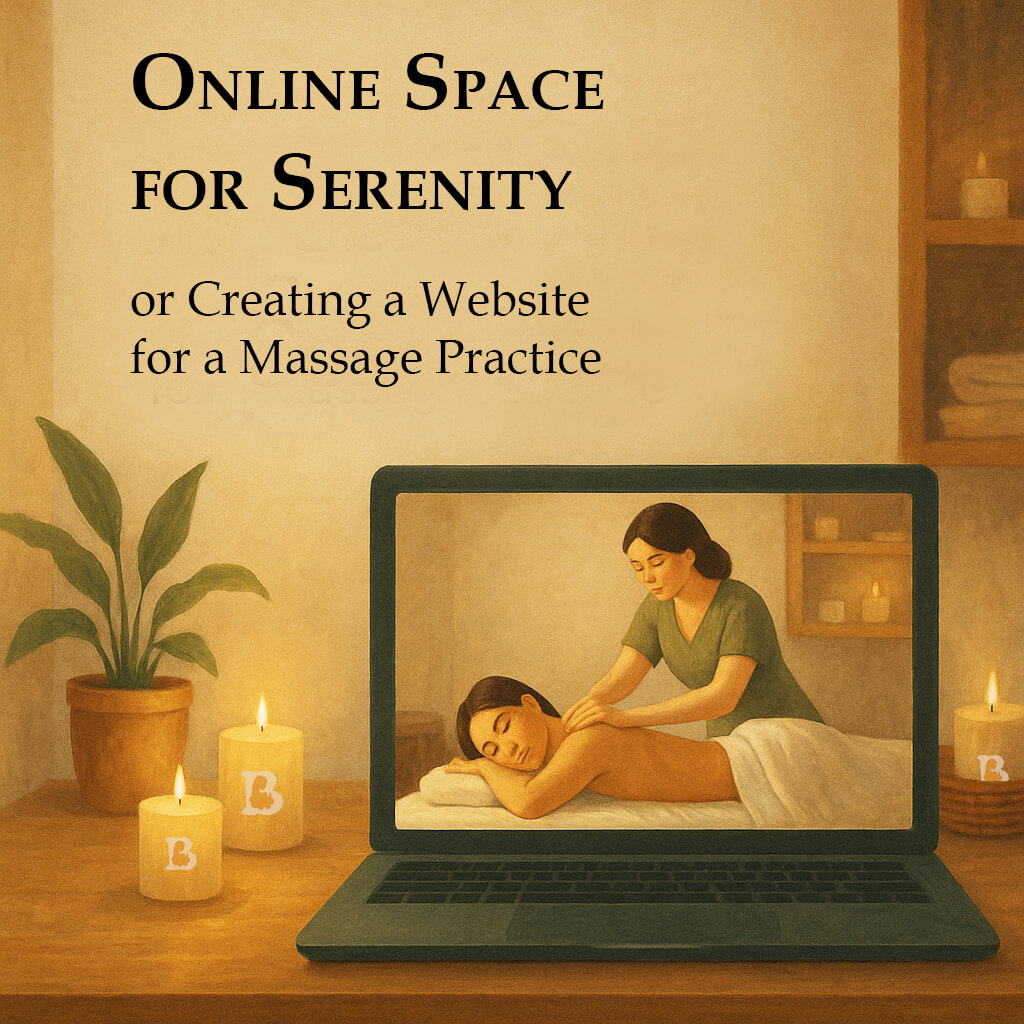
Creating a website for a massage practice has its own specifics, as it must convey an atmosphere of care, tranquility, and professionalism. Such a website differs from typical beauty-industry sites because the focus is not on appearance but on health, sensations, and trust.
Therefore, when designing the site, selecting photo and video materials, writing texts, and planning the work calendar, it is important to consider the key aspects of a massage practice, as they help make the website lively, professional, and reflective of the true atmosphere of the workspace.
When creating a website for a massage practice, the emphasis is placed on body-oriented therapy rather than aesthetics. A massage studio sells sensations, relaxation, health, and recovery.
The site must include descriptions of physiotherapeutic effects, clear indications and contraindications, explanations of massage techniques (lymphatic drainage, rehabilitation, deep tissue, sports massage, etc.), along with a strong focus on the therapist’s qualifications, medical background, and certifications.
To help clients choose the right type of massage and achieve the desired result, it is essential to provide detailed descriptions of techniques and their outcomes.
A massage website should clearly show what each type of massage provides, who it is suitable for, how a session is conducted, the duration, and the recommended course length to achieve specific goals, as well as visual diagrams of the treatment areas.
Since massage involves working with the body and health, clients must feel safe. Therefore, the website usually includes diplomas, certificates, and licenses, information about the therapist’s experience and specialization, details about hygiene and treatment protocols, as well as reviews (preferably with photos of the studio and real clients), and photos of the massage space to convey the atmosphere.
For massage clients, a sense of tranquility is crucial. This is why a massage practice website should evoke relaxation through design. Soft, calming colors work best, with an emphasis on minimalism, spacious layouts, and large photos or videos of the studio and the massage process. It’s better to avoid distracting elements.
A massage website also requires sections that are rarely found on typical beauty-industry sites, such as: “How to Prepare for a Massage,” “What to Expect During Your First Visit,” “Indications and Contraindications,” “What Clients Feel After a Session,” “How to Choose the Right Massage” (especially helpful for beginners), and others.
It is also important to consider features for online booking specific to massage practices, such as choosing the session duration (30, 60, 90 minutes). Most clients book a series of treatments, so the website should support adding combinations (e.g., back + neck and shoulder zone) and preferences for choosing a therapist (if there are multiple practitioners).
Massage practices typically focus on selling treatment courses rather than single sessions. For a massage therapist, client retention is essential.
Therefore, the website should offer packages of 5–10 sessions, discounts on memberships, and ideally provide pre-designed programs such as stress relief, post-sport recovery, detox, healthy spine, and others.
A “Problems – Solutions” section is especially useful for beginners and clients unfamiliar with massage. For example, deep tissue massage is helpful for neck pain; lymphatic drainage is ideal for swelling; sports massage works well for post-workout tension; and relaxation massage is suitable for chronic stress.
To build trust, a massage practice website should include detailed information about the equipment and conditions of the treatments. It is important to publish photos of the massage table, oils, devices (if any), explain why certain techniques are used, and indicate room temperature, music, and personalized offerings.
Many users are attracted to videos of the massage process, as massage is a tactile service that is easier to understand visually. Such videos increase conversion more effectively than photos.
Beautier wishes you success in creating a cozy online space for your massage practice that will help you grow to a new level and become a magnet for grateful clients!