7 Main Mistakes That Prevent Websites from Bringing in Clients
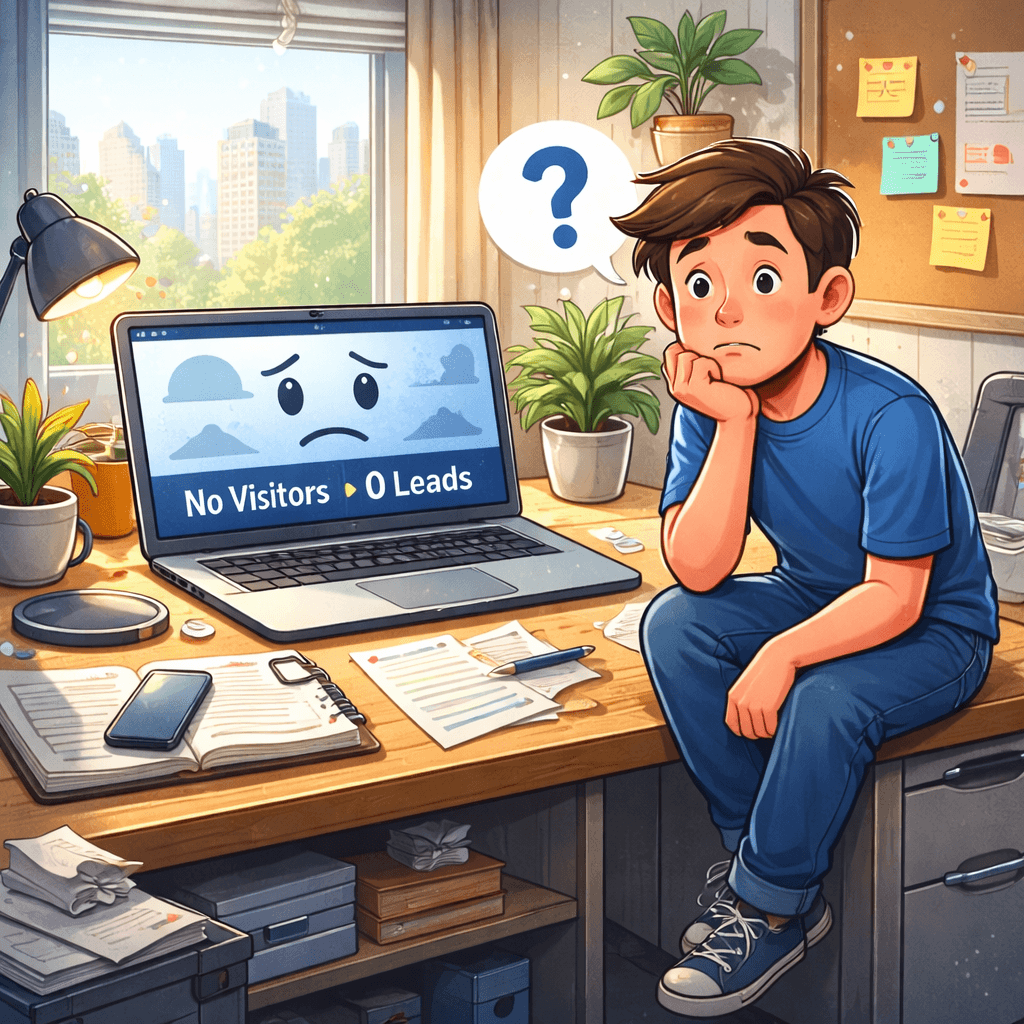
Many people are familiar with the situation: you paid for design and development, carefully planned the pages and content, created the website, chose a domain name, and found hosting. Everything seems great, the site exists, but it brings little benefit. No visitors, no clients, no real results.
It’s worth examining the main mistakes made when creating a website that turn it into a useless page that even search engines rarely visit. Below are 7 key reasons and problems that most website owners face, especially beginners launching new sites.
1. The Website Was Created, but No One Knows About It
A very common situation is when someone invests in building a website, launches it, and waits for clients. But miracles don’t happen. Clients won’t appear — and never will — if the site is not promoted. Without promotion, no one will see it.
To promote a website, it needs to be configured and optimized for search engines (SEO). This involves a set of actions aimed at improving the site’s ranking in search results and within search engine algorithms.
If the site has very little content, search engines will not understand where it should rank or how useful it is. A one-page site with only images will bring no real value to its owner. A website should contain useful and relevant content such as texts, service descriptions, articles, case studies, FAQs, reviews, and testimonials. The text should be well thought out, optimized, and provide valuable information.
No advertising means no target audience. Websites that are not yet popular should launch advertising campaigns. The most effective channels are Google ads and social media ads. Google ads are shown to people who are actively searching for something related to the site’s topic. Social media ads are shown to people who may not currently be searching for such products or services but could still be interested.
It is also important to place links to the website. These can be links in social media profiles, online maps, business directories, articles, forums, and more. Such links bring targeted visitors, and search engines perceive them as signals that the site is useful and relevant to users.
A website without promotion is like a shop in the middle of the desert. It exists — but no one knows about it and no one will ever visit.
2. It’s Unclear What the Website Offers and Why It’s Needed
After putting significant effort into creating a “perfect” website, it is important to analyze whether it is clear and intuitive for users.
If a visitor cannot understand within 3–5 seconds what the site is about, how it can help them, and why they should choose you, they will simply close the page and never return.
From the very first screen, it should be immediately clear what you offer, who it is for, what your advantages are and what value the user will receive.
3. Poor, Confusing, or Outdated Design
People judge by appearance. Their first impression of a company is often formed by its website, and first impressions matter.
If a site looks outdated, works poorly, or is inconvenient to use, users may assume that no one cares about it anymore, that it hasn’t been maintained for a long time, and that no resources are invested in it. As a result, the company itself may appear unreliable, as if it treats its other responsibilities the same way.
In many cases, users simply leave and go to competitors with a clearer, more convenient, and more modern website.
4. The Website Is Not Adapted for Mobile Devices
Today, 60–80% of users access the internet from their phones because it is convenient, fast, and always within reach.
If a website is not optimized for mobile devices, it becomes almost impossible to use. Most users will leave within a few seconds if they see tiny text, inconvenient buttons, or elements that break when viewed on a phone. Google also lowers the rankings of such sites in search results.
A website must be well designed, optimized for mobile devices, and easy to understand and use quickly.
5. No Trust in the Website, No Trust in the Company
Users will not leave a request or contact information if they do not feel trust, convenience, and value.
To create a sense of trust on a website, it is important to include customer reviews, case studies, portfolio examples, real photos of the team, company guarantees, clear company contact information.
Without these elements, a website may look like an anonymous page trying to collect personal information or steal user data.
6. No Clear Call to Action
Many websites fail to tell users what to do next.
A visitor arrives and does not understand what action they can take or how to do it quickly. Most users will not navigate through multiple pages just to find a small button that allows them to leave their contact details or become a client.
Websites need clear and visible call-to-action buttons such as “Book an appointment”, “Submit a request”, “Get a consultation”, “Order now”, “Register”, “Contact us”
If these are missing, users simply leave because it feels like they are not really welcome, and most people do not have time for unnecessary actions. Today, everyone values speed and convenience.
7. The Website Competes with Snails and Loads Too Slowly
If a website takes longer than 3–4 seconds to load, up to 50% of users will leave, and Google will significantly lower its search ranking.
Common reasons for slow websites include heavy images, poor hosting, too many scripts, poor optimization.
No one wants to wait — and sometimes even the browser gives up before the page finishes loading.
The Key Idea
If we summarize everything above, a website brings clients only when three things work together at the same time:
- Traffic: people find the website and visit it.
- Trust: visitors trust what they see on the site.
- Conversion: “came, saw, conquered,” or in other words, the visitor came, liked what they saw, and submitted a request or registered.
If even one of these three elements is missing, the website will not work and will bring no real value, except perhaps a salary for someone who is supposedly maintaining it.